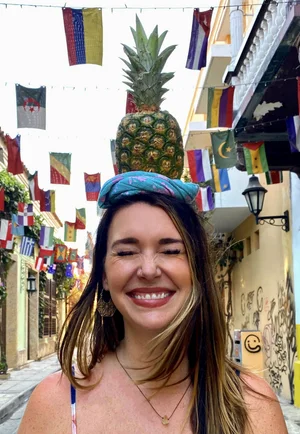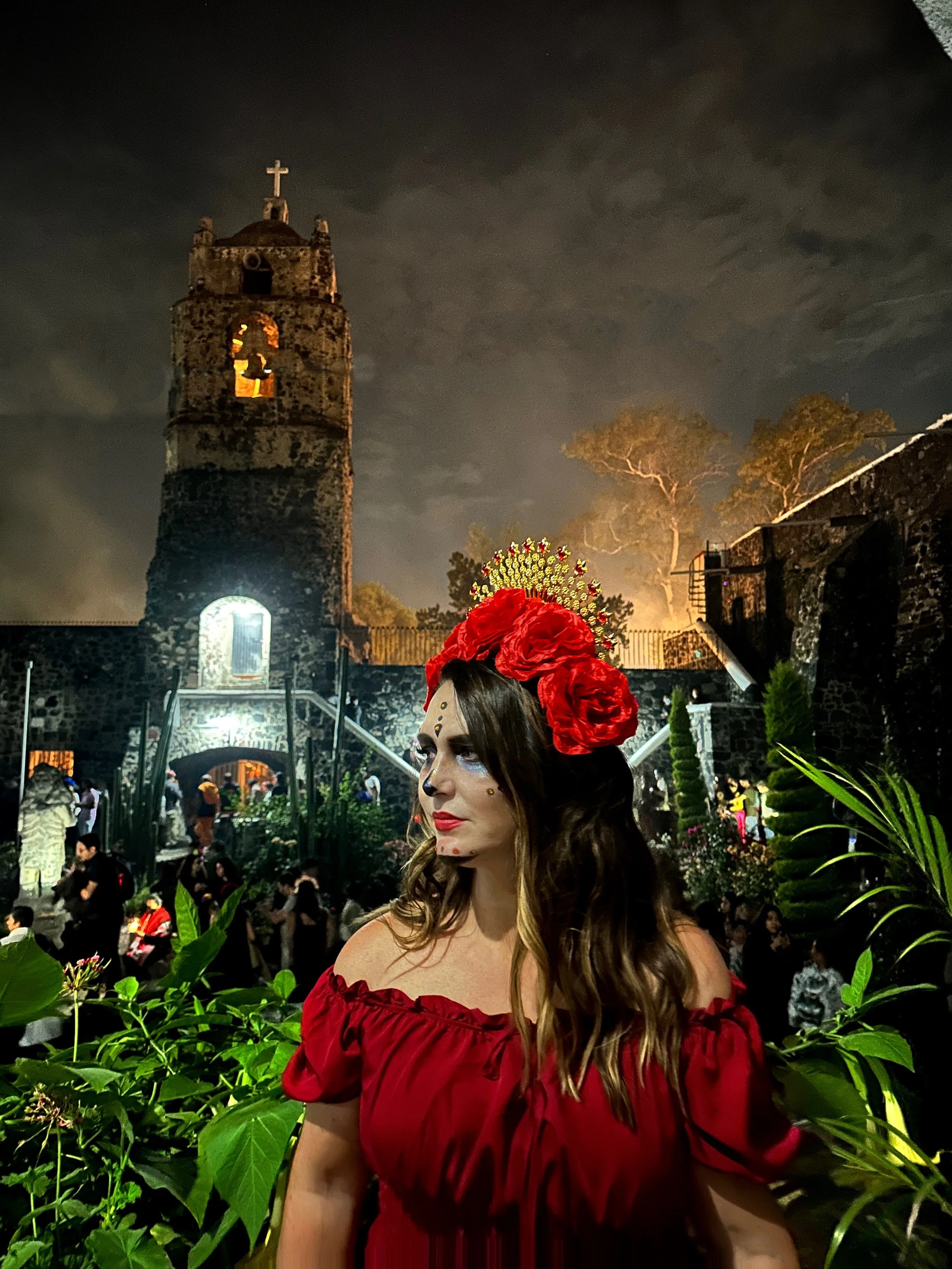
Day of the Dead night, back when Mexico City still felt like a secret.
On my 2025 Mexico City group trip, half of my group never made it to our welcome dinner, including me.
We piled into Ubers on our first night, and the ETA immediately started doing gymnastics. Seventeen minutes. Then 57. Then eight. Then 35. Our driver followed his GPS with the blind faith of a man who had never met a parade, and after 25 minutes of driving, we were exactly one block from our house. (I was three rows back, the only person in the car who spoke Spanish, saying “señor…” in increasingly concerned tones.)
Eventually, after over an hour of driving in circles and getting nowhere, we got out and walked, and that’s when we found the reason: a Day of the Dead parade, miles long, with no way across it. Half of the group was waiting at the restaurant, wondering what was taking us so long.
I asked a street vendor where we could cut across to get to the other side. He laughed—a long, drawn-out, deeply entertained laugh.
“You can’t.”
I looked down the street at the thousands of people that seemed to stretch for miles in both directions, sighed, and resigned myself to the reality of the situation.
As a group tour operator, it’s normal to have to punt in these situations. Things are often outside of our control, and sometimes no amount of planning can prepare you for the things that happen when you travel. So I turned our welcome dinner into an impromptu street food tour instead, stopping for snacks and marigold ice cream, and walked for about an hour and a half home, because there was no other way. It was peak Type 2 fun: miserable in the moment, and one of my favorite stories now. (It’s also the namesake of my company.)
That was 2025, and it was the last Day of the Dead group trip I’ll ever run unless something drastically changes.
I ran Type 2 Travel’s Day of the Dead trip to Mexico City for five years, from 2021 to 2025, and it was the very first trip I ever led. Here’s why I’ve since retired it: overtourism (fueled in part by a parade that was invented for a James Bond movie), the commercialization of a sacred holiday, and my high standards for creating unique travel experiences. I’ll also tell you what I’d do if you still want to go, and what we’re going to be doing in Mexico City in 2027 instead.
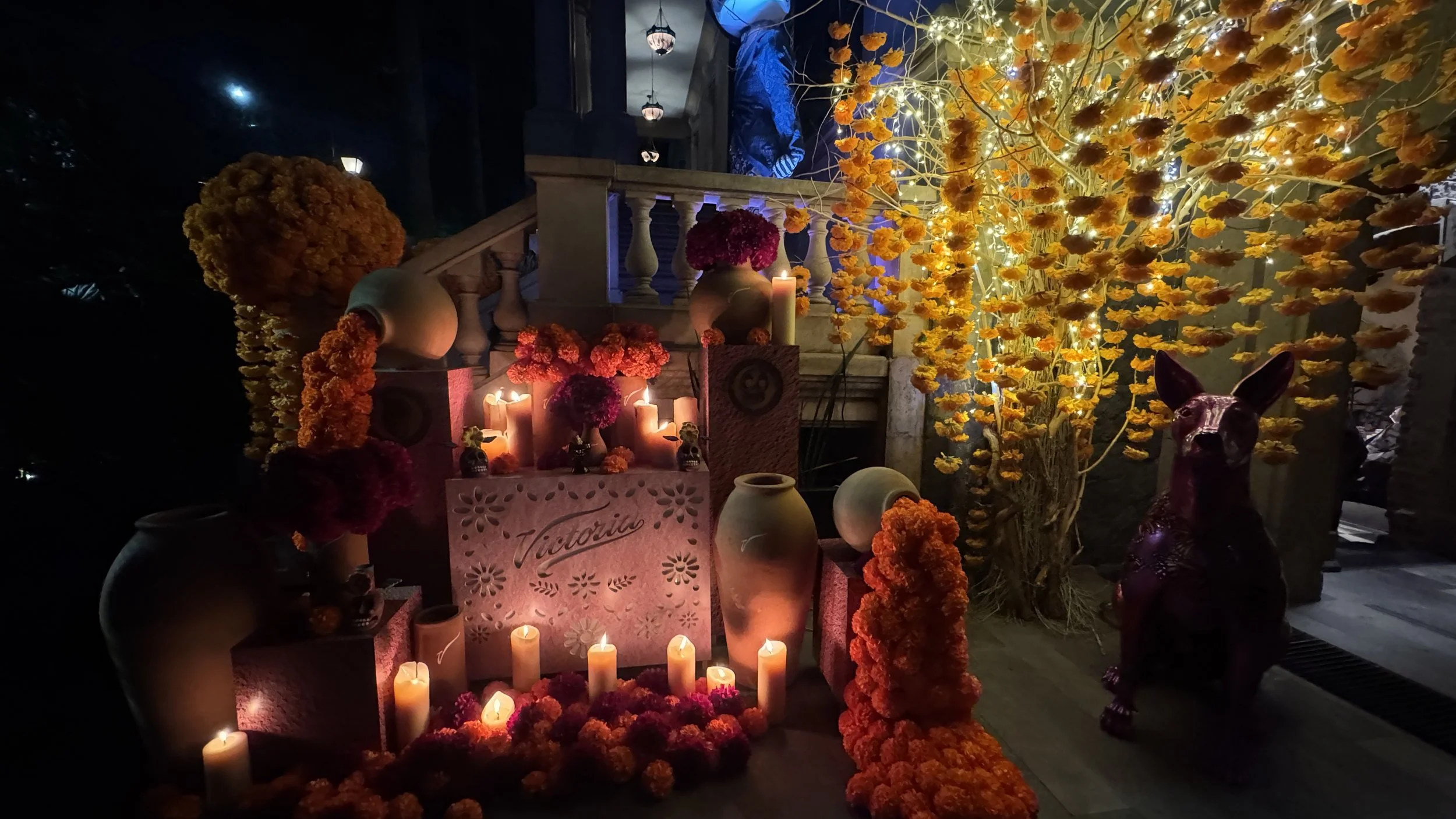
An ofrenda, lit up for the people it’s built to welcome home.
The first trip I ever ran
Day of the Dead (Día de Muertos) is one of the many reasons I fell in love with Mexico City—and with what my job could be as a group tour operator. It truly holds a special place in my heart, and it always will.
Back in 2021, Mexico City still felt like a secret. A secret with more than 20 million people in it, sure, but a secret nonetheless. At that time, people still felt like it was a "sketchy" place to travel to, which seems wild now that half of Instagram has apparently moved to Roma Norte.
It was also the first group trip I ever ran. I’d just walked away from a 14-year career, and days before we left, my last living grandparent died. Her funeral was back home in Wisconsin, on Day of the Dead, and I was in Mexico City for a holiday built entirely around welcoming back the people you’ve lost.
The irony was not lost on me, and this was the beginning of many sacrifices I’ve had to make as an entrepreneur.
That night, our group went to the cemetery in Mixquic, a small town on the outskirts of the city, where families gathered at the graves of the people they’d lost, surrounded by marigolds. I shed a lot of tears, mostly feeling guilty about being in such a sacred, meaningful place celebrating death while my family was burying my grandmother back home. At the same time, I felt my grandmother was standing right there with me, telling me I’d made the right decision to run my trip. (I wrote about that night here, if you want the full story and a box of tissues.)
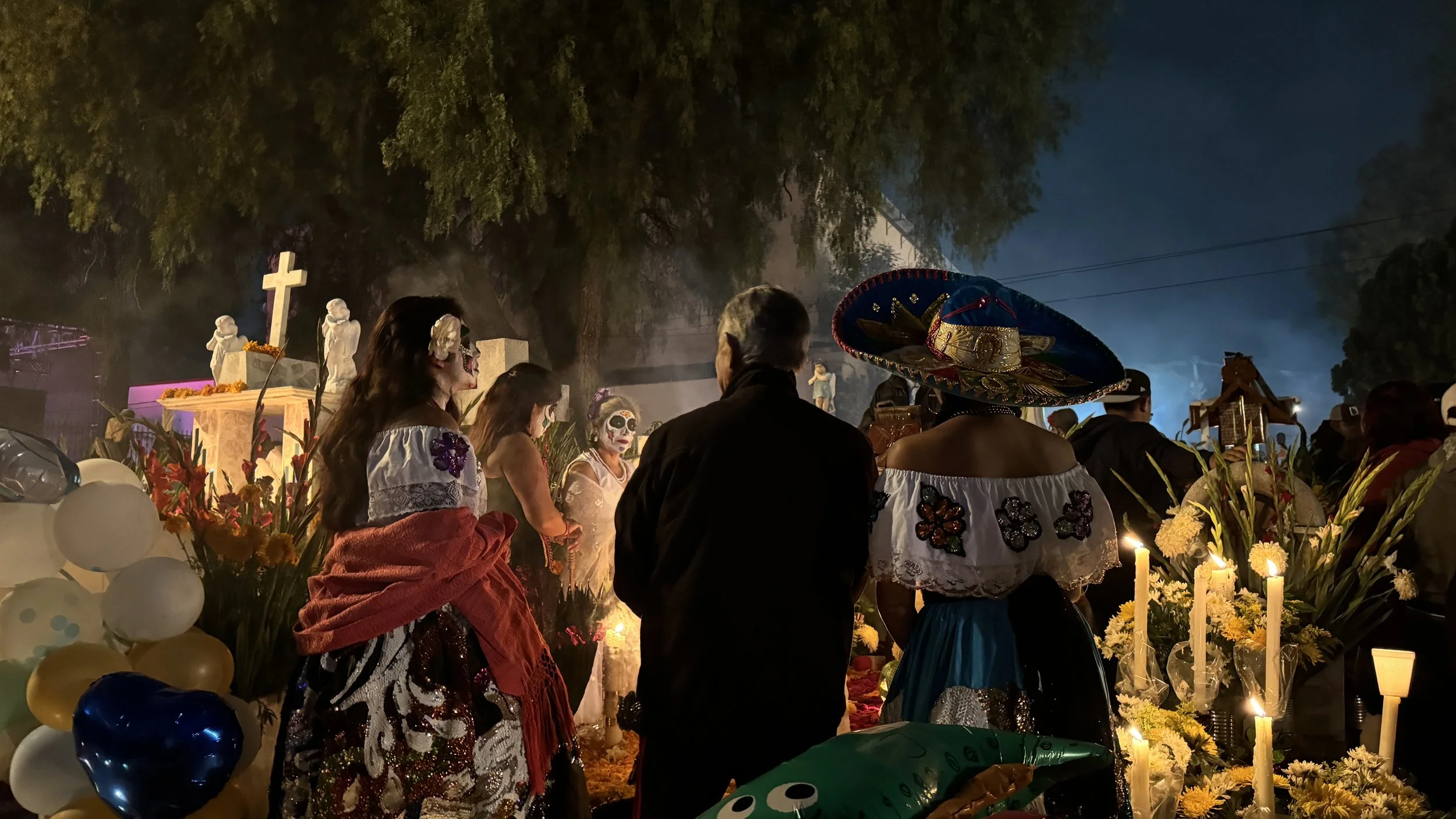
Families gather at the graves of the people they’ve lost, surrounded by marigolds and candlelight.
After all, that’s what Day of the Dead is for: honoring the people who’ve left us instead of only mourning them. It completely changed how I think about death. On my next CDMX trip a year later, I got a marigold tattoo with recuérdame (“remember me”) written in the stem, and my groups have gotten 30+ tattoos in Mexico City since to commemorate the trip and our loved ones.
All this is to say, my feelings around Day of the Dead are a little complicated, if I’m being real. Part of the experience is often visiting cemeteries, which means standing in the middle of strangers’ grief and watching them mourn. It’s beautiful, but can also feel invasive at times. I’ve never fully settled how I feel about that part.
But Mexicans celebrate this holiday together, out loud, and over the years, it’s turned it into something huge that is celebrated all over the world. Which brings us to James Bond…
The James Bond movie that started it all
While the roots of the Day of the Dead started roughly 3,000 years ago in pre-Columbian Mesoamerica, Mexico City’s famous Day of the Dead parade isn’t an ancient tradition. In fact, it started not that long ago in 2016.
In the 2015 Bond movie Spectre, Daniel Craig chases a bad guy through a massive Day of the Dead parade in Mexico City: skeleton costumes, giant floats, the whole shebang. It looked incredible, and it made everyone want to go.
There was just one problem: that parade didn’t exist. Hollywood made it up.
The movie gave millions of people the idea that Mexico City had a Day of the Dead parade, and officials knew visitors would come expecting it. So in October 2016, the city held its first-ever Day of the Dead parade, modeled on the one in the film. Life imitated a Bond movie, and the movie inspired the tradition.
It’s not the first time Hollywood has confused travelers on what came first. Casablanca was filmed entirely on a studio lot in California, and Rick’s Café never existed until a former American diplomat opened a real one in Casablanca in 2004. The difference is that Casablanca got a restaurant. Mexico City got a massive international spectacle that drew 1.6 million people this year, according to the Spanish news agency EFE, dropped right on top of a holiday about remembering the dead.
Don’t get me wrong, some of that is pure joy. But some of it is a holiday about remembering your grandmother, sold back to you on a keychain.
When a sacred holiday becomes a theme party
Somewhere along the way, Day of the Dead went global. UNESCO added it to its list of the Intangible Cultural Heritage of Humanity in 2008, which is a fancy way of saying it’s a living tradition worth protecting. But much of the world heard “skeletons, marigolds and a party” and ran with it.
By my last few trips, Mexico City in late October started to look like a theme party. There was face painting offered on every corner, and it seemed like everyone was dressed as a Catrina. There were flower crowns for sale everywhere you looked, endless costumes, and vendors selling souvenirs and Day of the Dead propaganda by the armful. This year’s parade even rolled out a Catrina more than 33 meters tall, officially the tallest in the world according to Guinness. Nothing says “quiet remembrance” like setting a world record.
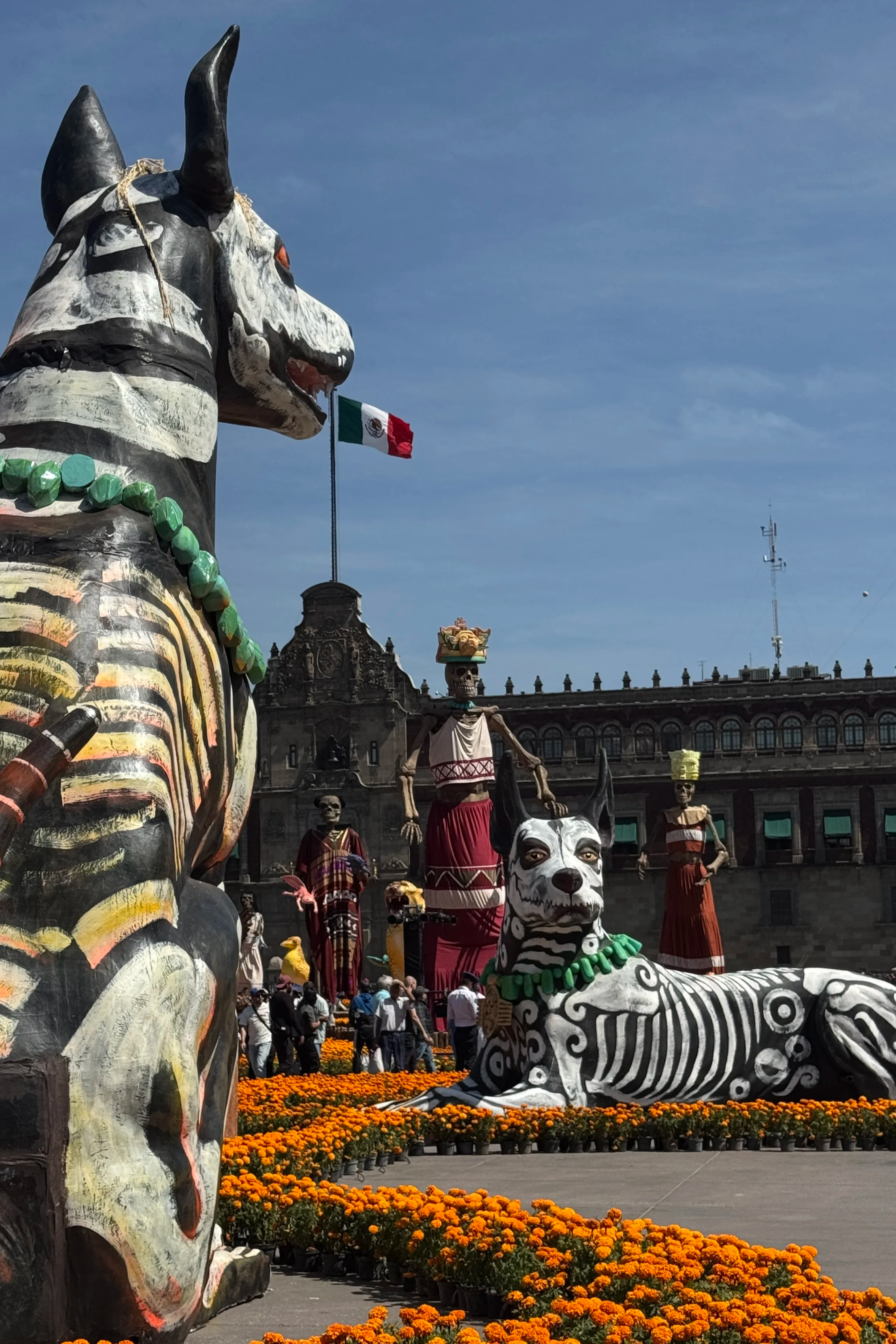
Giant skeletons, marigold carpets, and not a quiet corner in sight.
Even big business has tried to cash in. In 2013, ahead of the Pixar movie that eventually became Coco, Disney tried to trademark the phrase “Día de los Muertos.” People were furious, a petition took off, and Disney dropped it almost immediately.
None of this is inherently evil or bad intended. Mexicans celebrate Day of the Dead loudly and joyfully, plenty of them paint their faces too, and many of them love it when visitors celebrate with them. When you’re doing it to celebrate and remember alongside the people whose tradition it is, it’s an honor. When a tourist does it because it looks cool for Instagram, it starts to become a costume. My groups have done Catrina makeup too, painted by local artists as part of the celebration, so I’m not throwing stones from far away.
The reality is that there’s a fine line between appreciating a culture and appropriating it. When you’re standing in a cemetery watching a family sit with someone they’ve lost, that line gets very blurry, very fast. In Mixquic, I’ve watched locals stand in line with the tourists just to get into the cemetery where their own families are buried.
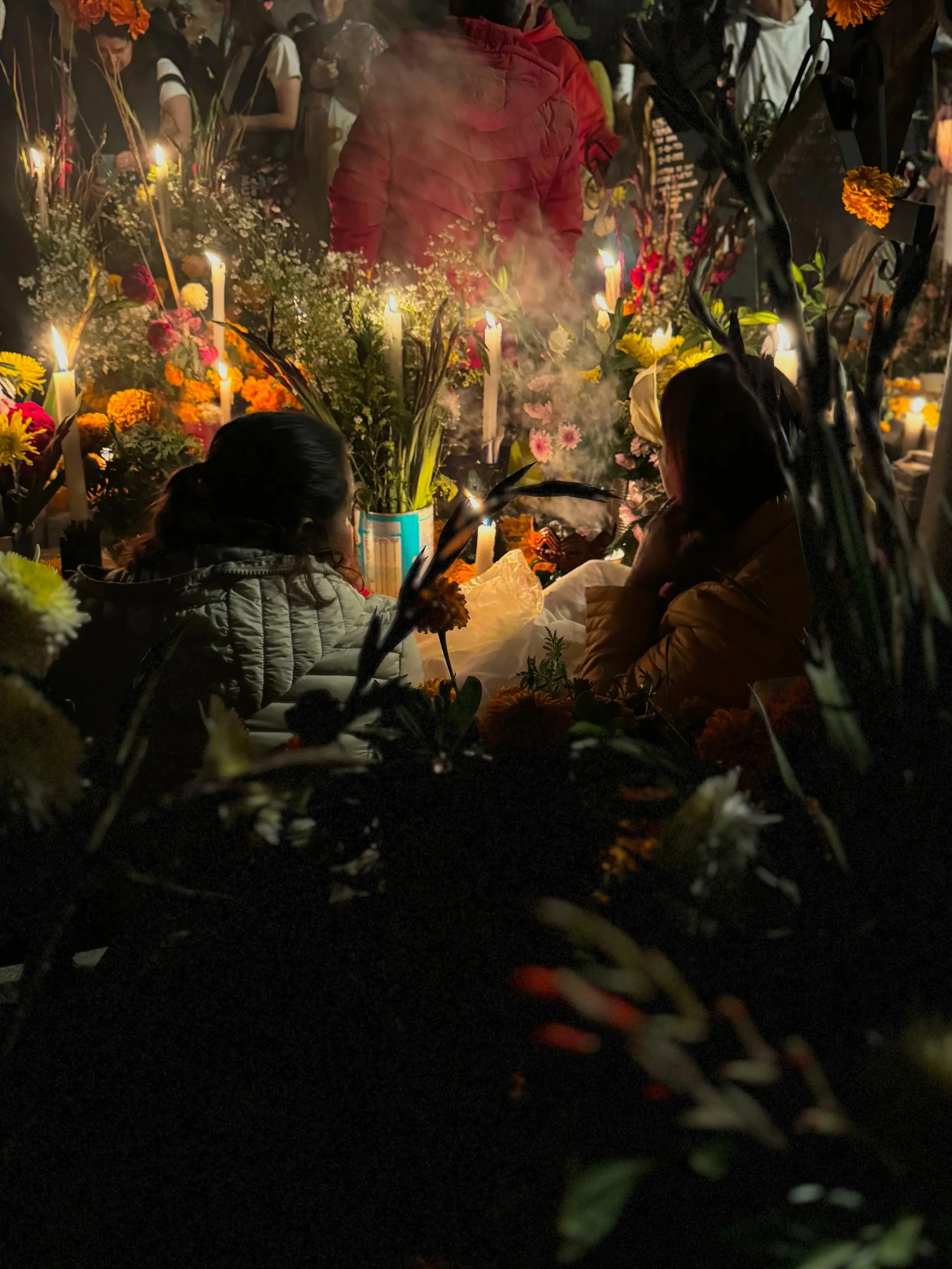
This is someone’s family reunion. Act like a guest.
What it looks like from the inside
By 2025, running this trip felt less like planning a holiday and more like planning a military operation. Hotels, restaurants, experiences, crowds: all of it had gotten harder.
Everything cost more and booked up faster. We plan our trips more than a year in advance. The city announces its parade dates and routes… whenever it feels like it. Typically, they confirm the specific schedule just a few weeks prior to the event. (Spoiler: not a year in advance when I’m making an itinerary.) And when a parade is happening, anything involving a car—and often, even walking on foot—is off the table. Taxis, Ubers, your dinner reservation, your sense of optimism. Nothing moves.
I’d also quietly broken up with Mixquic, the same quaint little cemetery where I’d cried for my grandmother just a few years earlier. The internet had gotten hold of a once sacred and mostly unknown spot, and after 2021, the streets had gotten so packed that we literally couldn’t move. In 2025, the city counted about 100,000 visitors in Mixquic over three days, nearly seven times the number of people who actually live there. At some point being pressed shoulder to shoulder in a crowd that size stopped feeling like a cultural experience and started feeling unsafe.
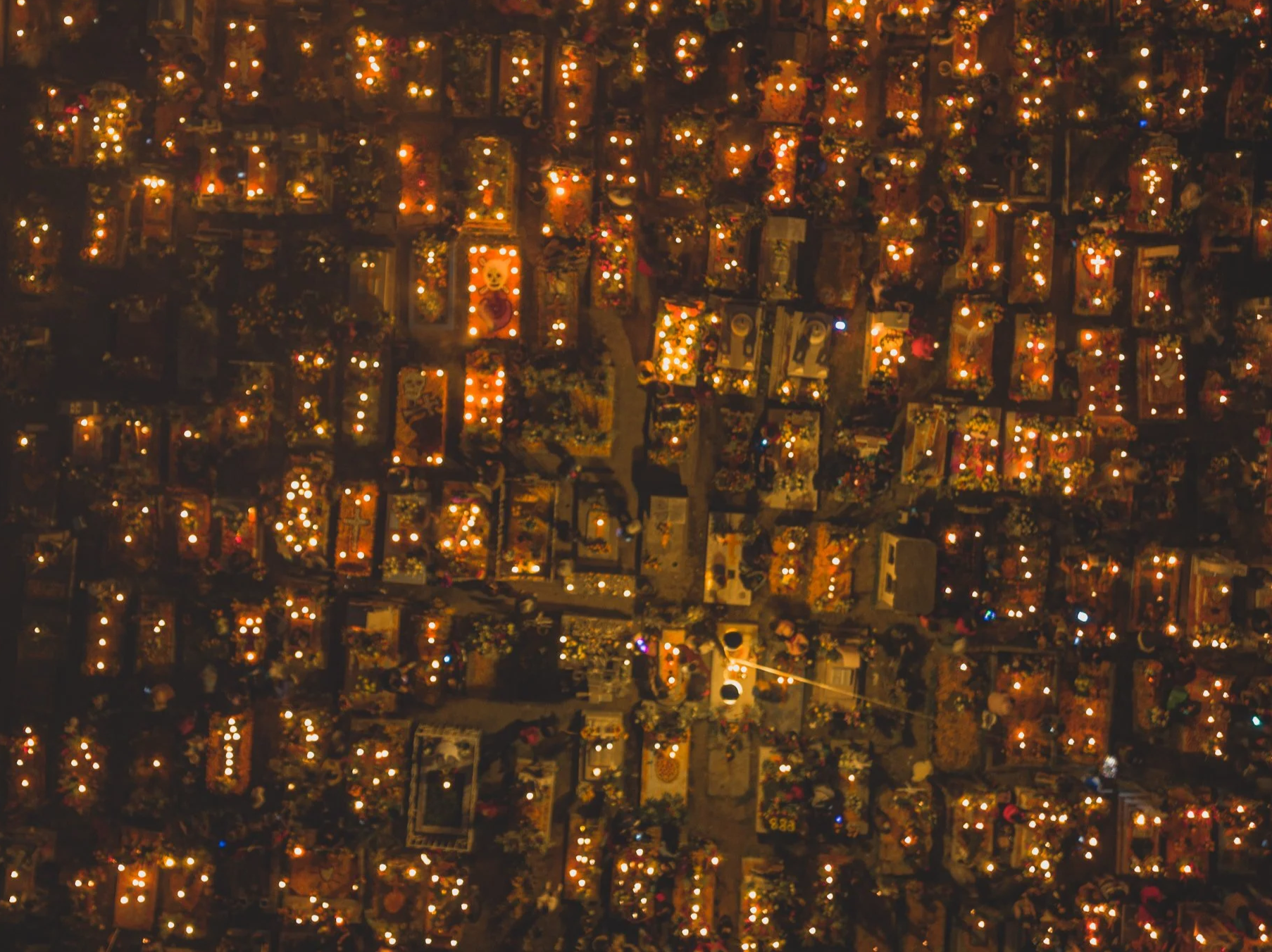
Thousands of candles, and somewhere in there, thousands of people.
I’d known for a while that 2025 would be my last Day of the Dead group trip. I just didn’t expect Mexico City to make the point so loudly on our very first night. When that group and I recorded a podcast episode about the trip, I said I’d retired this trip at the perfect time, “because that shit was bananas.” And I stand by it.
The best day of that trip happened somewhere we’d never been in years prior. In my effort to find something more “authentic” than Mixquic, we went to a tiny town where we were the only tourists. An old woman walked up to three of my travelers, talking a hundred miles an hour in Spanish, to tell them how happy she was that they’d come. One of them was so moved by her words that she cried. Another said it was the exact opposite of locals wishing the tourists would go away.
That’s the thing about Day of the Dead, and about a lot of travel. On its own, it’s magic. Shared with everyone who had the same idea at the same time, it’s a logistical nightmare.
And the magic rarely lasts. Mixquic didn’t always feel like a mosh pit, either. Somebody finds a place, somebody posts it, somebody brings a group (hi, it’s me 👋🏻), and a few years later you can’t move through the streets. I’d be shocked if that little town didn’t start to feel a bit more like Mixquic this year. It feels like everything special eventually gets “ruined” by tourism, and the more sacred and rare something feels, the faster everyone wants a piece of it.
Yes, I’m part of the problem
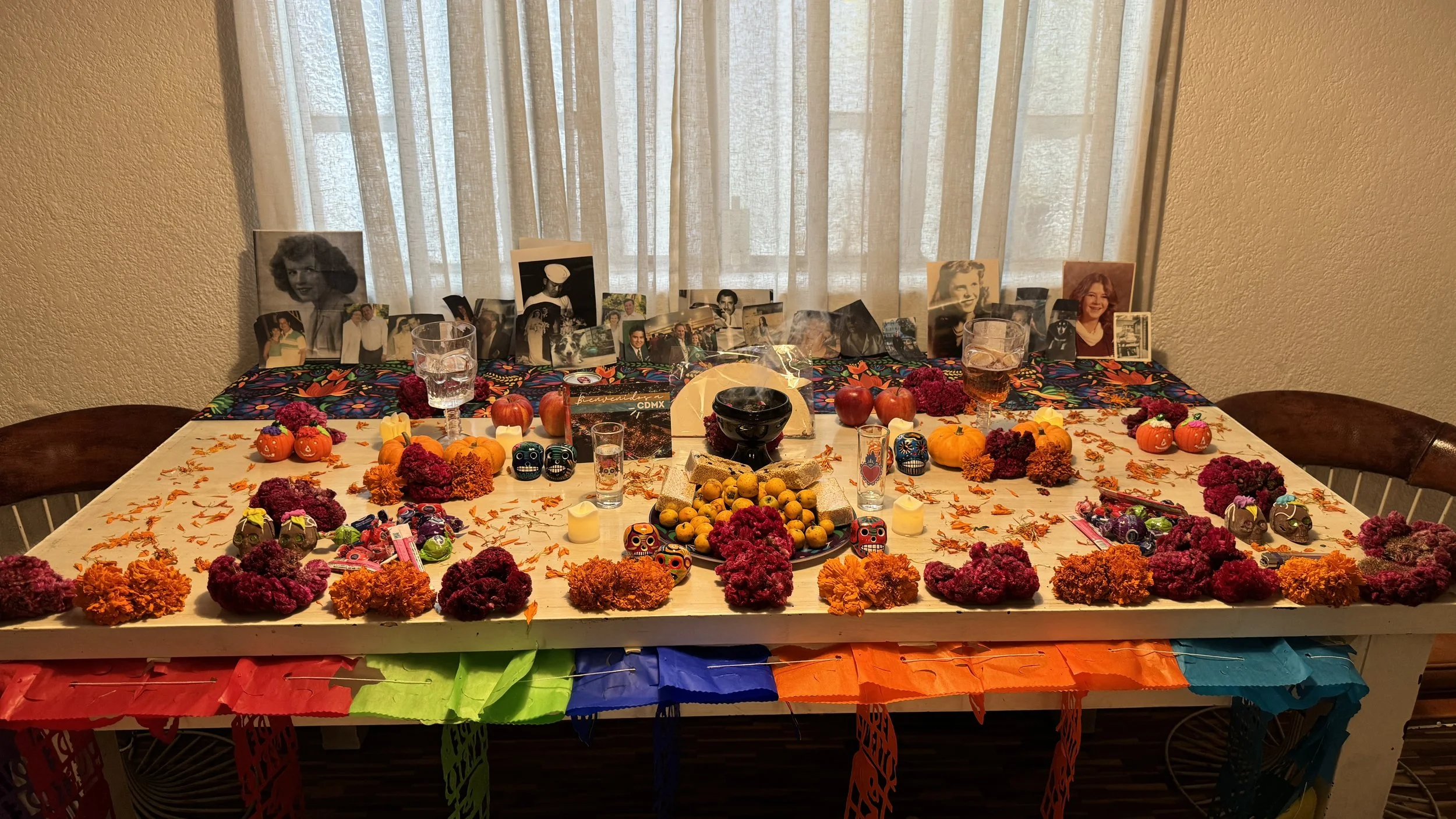
The ofrenda our group built together, with photos of the people we came to remember.
I’m a tour operator who brought groups to Day of the Dead for five years, so I don’t get to pretend I’m not part of this.
That said, we never treated Day of the Dead like a theme party. We worked with locals throughout the entire trip and got their input on how we celebrated. Our local guide came to the house where we stayed to walk us through the tradition, and we built our own ofrenda together. My travelers brought photos of the people they’d lost, and we held a small ceremony around it. One traveler built hers for her late father and through her tears, she told me she felt calm instead of the sorrow she’d expected. Those nights are some of the most meaningful I’ve ever had on a trip, and they’re the reason I loved running this trip for five years.
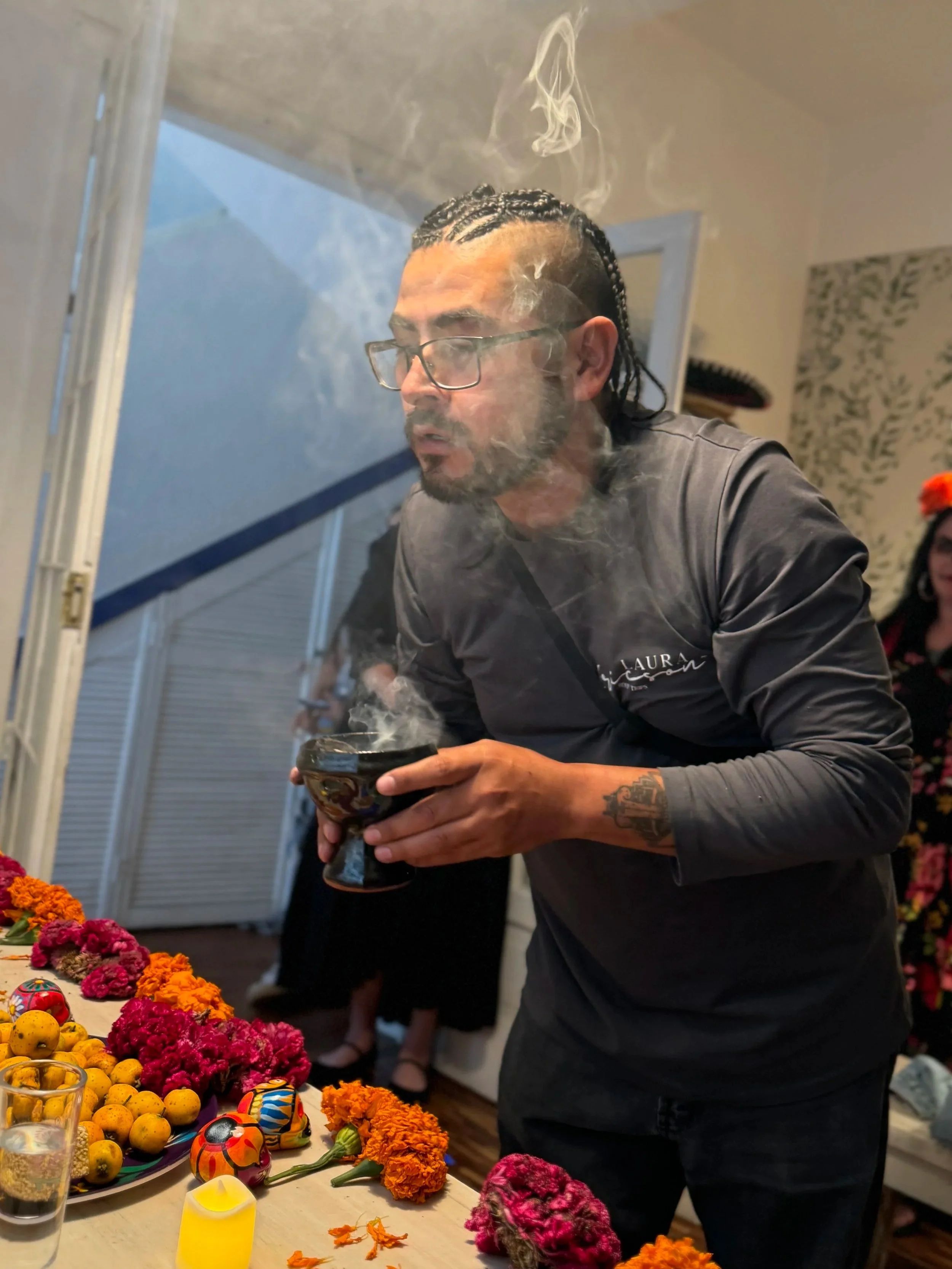
Our local guide blessing the ofrenda with copal smoke before our ceremony.
But good intentions don’t make a crowd any smaller.
It’s natural to say you want a place to yourself. Everybody does. Most of us have at one point or another stood in a crowd of thousands thinking, “Wow, this would be so much better without all these people.” But by going, you’re contributing to the crowd, and when I build a trip around a holiday and invite people along, I’m deciding where and when a whole group of people shows up. I can keep encouraging that, or I can make a conscious decision to stop.
Day of the Dead is expected to bring in roughly $2.9 billion in Mexico this year, and an anthropologist at Mexico’s national university says that most of the tourism money flows to outside businesses, not the communities actually celebrating. I run an outside business, so that also includes me.
While I know our trips put money directly into the hands of local guides, artists and families, I also know I’m not special. As a tour operator, I’m not immune from the rules. In fact, I’d argue that it’s my job to lead by example and practice what I preach. So, in response, I’ve stopped going.
If you still want to go for Day of the Dead (and you might)
You can absolutely still go to Mexico City for Day of the Dead. Just go with your eyes open.
Prepare for chaos. Book your hotel and restaurants early, expect to pay more, and assume at least one plan will go sideways.
Go before the holiday. In the days leading up to it, the city is already decorated and people are celebrating, without the peak crowds.
If there’s a parade, don’t get in a car and expect to get anywhere. I say this with love, blistered feet, and marigold ice cream in my heart.
Check the Formula One calendar before you book anything. It almost always happens at the same time (why??? I do not know).
Look beyond Mexico City. Other cities and towns celebrate too, and at this point, they likely will have more authentic experiences.
At the cemetery, remember you’re a guest at someone else’s family reunion. Ask before photographing anyone, turn off your flash, don’t step on graves, and never pose in front of a family praying. Essentially, make yourself invisible.
Mexico City in May, on a regular week
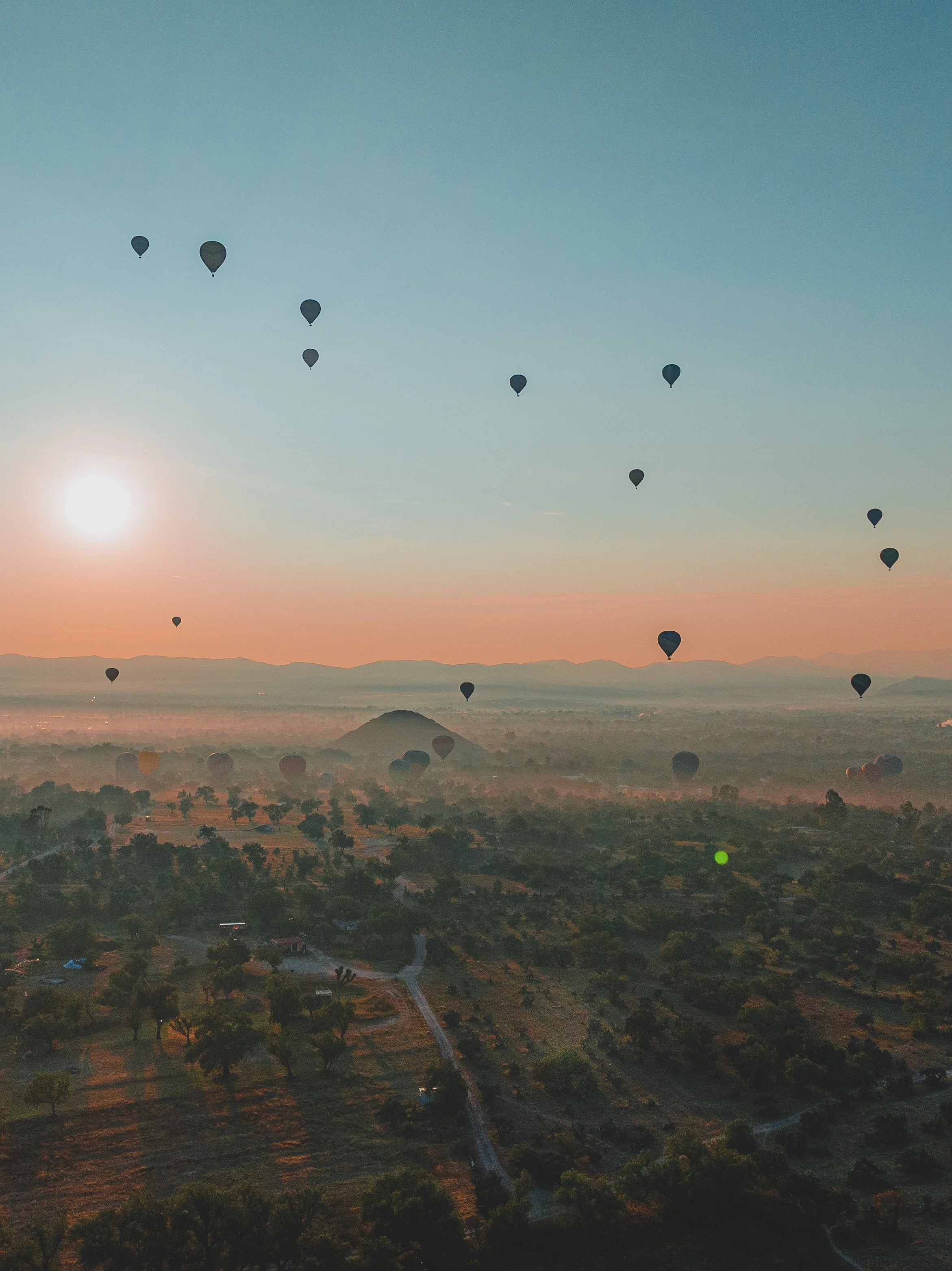
Sunrise over Teotihuacán. It’s my favorite way to start a day in Mexico.
The first time I went to Mexico City, it was May, and it felt like a completely different city.
You could walk down the sidewalk without getting body-checked. You could get a dinner reservation without planning months in advance (except for Pujol, of course). You could cross the street without waiting for a parade to end and didn’t feel like you spent half your trip waiting in traffic. It was just a normal city, where people go to work, run errands and eat really, really good food.
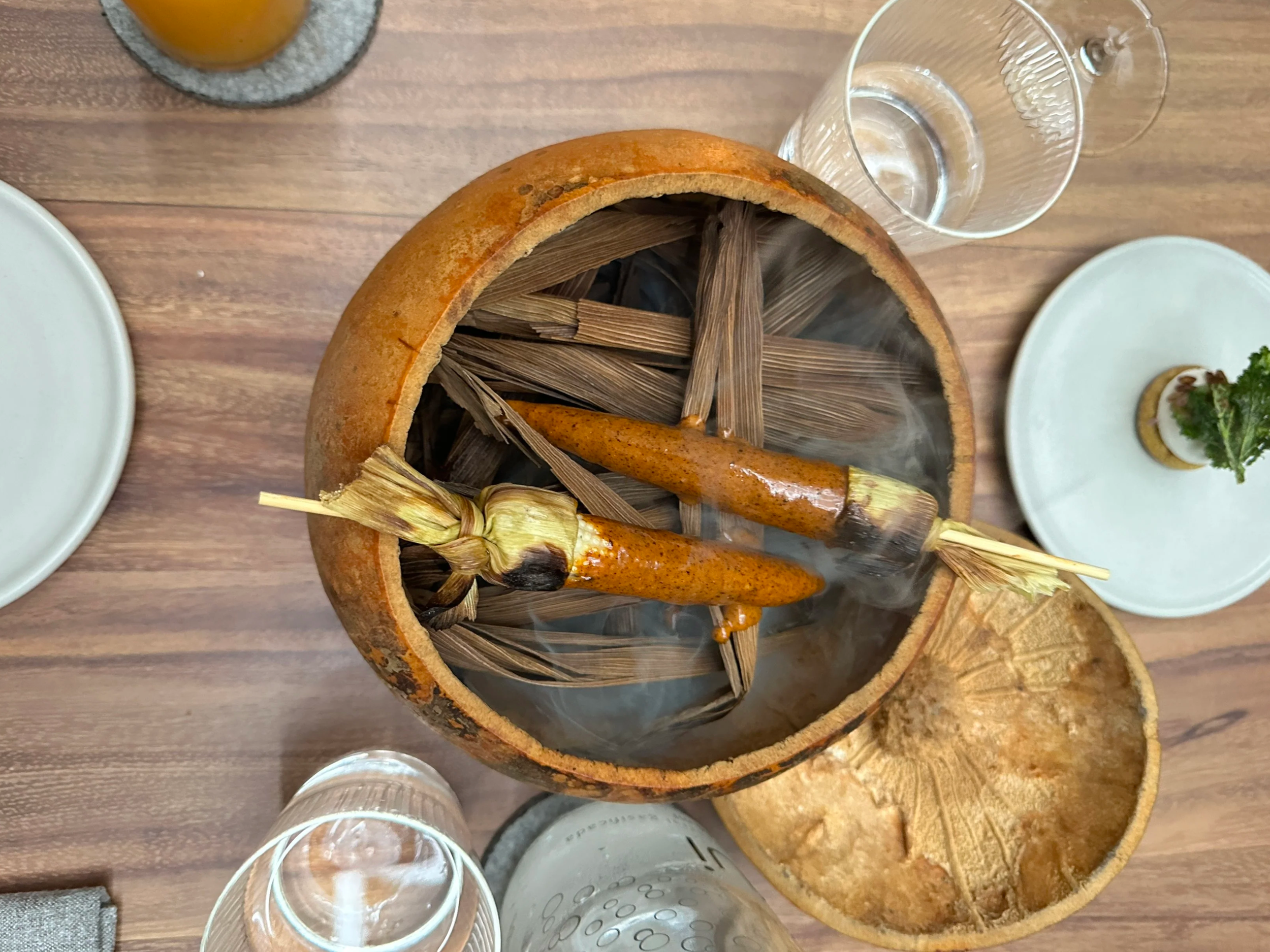
Pujol’s famous smoked baby corn, and yes, it lives up to the hype.
When I think about it, that’s the Mexico City I want you to meet. So we built a new trip around it: a five-day food trip, May 12–16, 2027, led by María Saenz from our team.
You’ll land, drop your bags and go straight into a taco crawl through some of the city’s favorite taquerías, because at Type 2 Travel, we don’t believe in easing in.
The next morning starts with pastries from a bakery run by one of the most celebrated chefs in the world (worth the line, I promise). Then you’ll wander a traditional market with a local chef who knows every vendor by name and explains the why behind every chile, corn and spice. Back in a private kitchen, you’ll press blue corn tortillas by hand, build your own salsas, and cook a multi-course meal from the ingredients you just picked out, with mezcal poured along the way.
The next day, you’ll skip Xochimilco’s party boats for a quiet, private glide through the canals to a working floating farm, one of the ancient chinampas that have fed this city for centuries, for a farm-to-table meal served right where the food was grown.
You’ll finish the trip with a slow morning in bohemian Coyoacán, with its cobblestone streets, tostadas con todo, and churros worth the detour. And on our last night, we’ll sit down at two-Michelin-star Pujol for a tasting menu built around a mole madre (a “mother” mole the kitchen has been adding to and reheating since 2014, like a sourdough starter). I’ve been there five times, and it’s likely one of the most memorable dining experiences you’ll ever have. It’s also the kind of dinner most people save up for (assuming they can even land a reservation), and on this trip, it’s all taken care of.
Every reservation, every ride and every table is handled for you. Your only job is to show up hungry—no parades required.
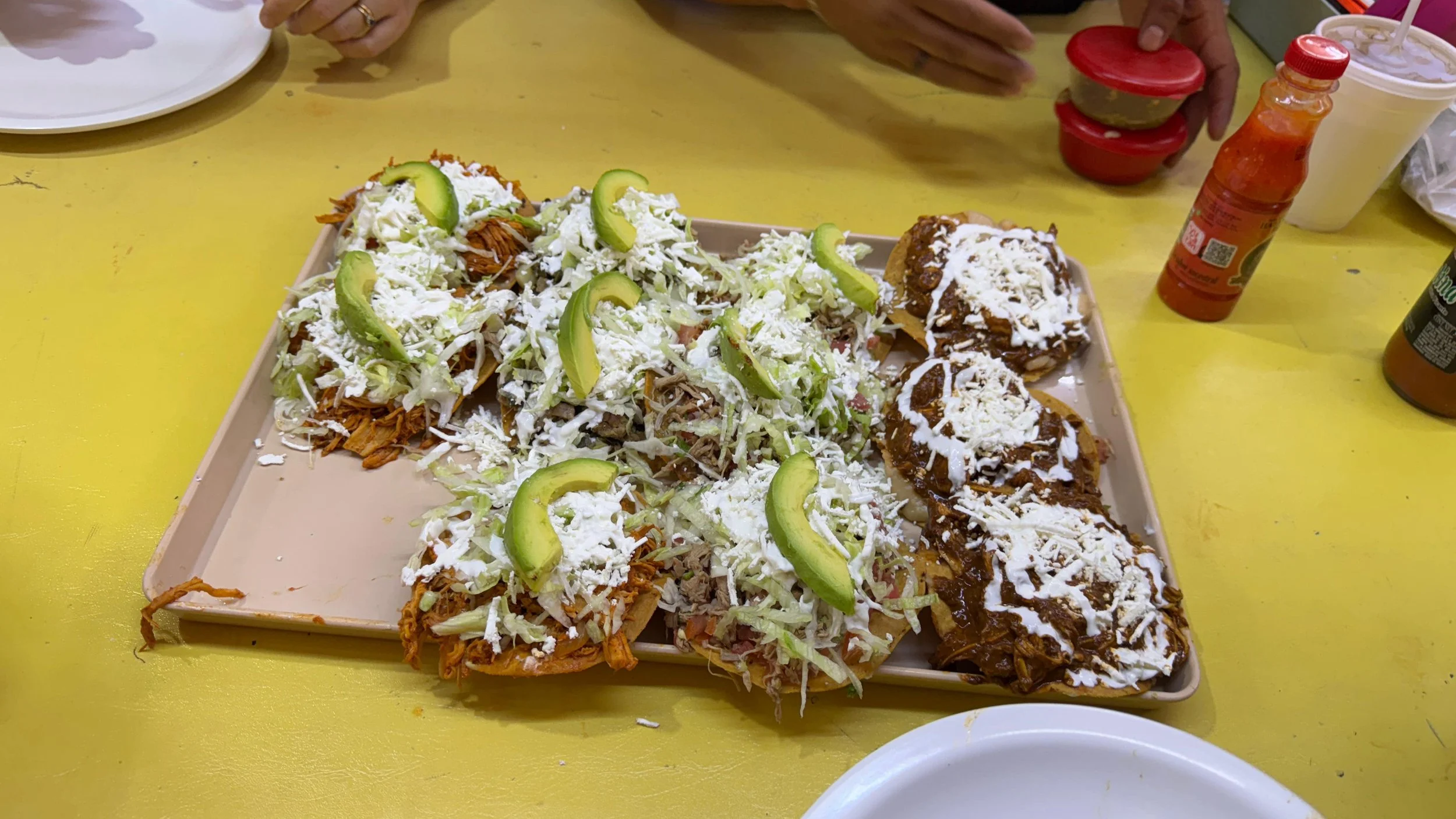
Tostadas con todo in Coyoacán. Pace yourself. (You won’t.)
If Day of the Dead has been on your list for years, I’m not telling you to skip it. I’m telling you Mexico City is so much more than one weekend. Maybe you’ve always wanted to go, but the crowds scared you off. Maybe you went once in October and spent half of it in traffic. Maybe you just want the tacos. (Valid.)
If a food tour is your jam, here are seven reasons to spend five days eating in Mexico City. If it sounds like your kind of trip, join the waitlist: the waitlist gets first access to book on November 12, before the trip goes public.
We’ll hopefully see you in May. Bring your appetite, and we’ll bring the tacos.
Day of the Dead in Mexico City: questions we actually get
When is Day of the Dead, and what else is happening that week?
The main days are November 1 and 2, and celebrations start building in late October. The parade usually falls on a weekend before November 2, and its date and route come out much closer to the holiday than most people plan a trip. In 2026, the Formula One race ran October 30 to November 1, so check both before you book.
Is Day of the Dead the same as Halloween?
Nope. It’s not about being scared of the dead, it’s about welcoming them back. Families build ofrendas (altars) with photos and their loved ones’ favorite foods and drinks, and marigolds are believed to guide the spirits home. In small towns, some families lay a path of petals from the cemetery to their front door.
Where else in Mexico can you experience Day of the Dead?
Most cities and towns in Mexico celebrate, and many feel more like a family holiday than a spectacle. Smaller towns outside the big cities are your best bet. Just know that once a town shows up on Instagram, the crowds tend to follow.